
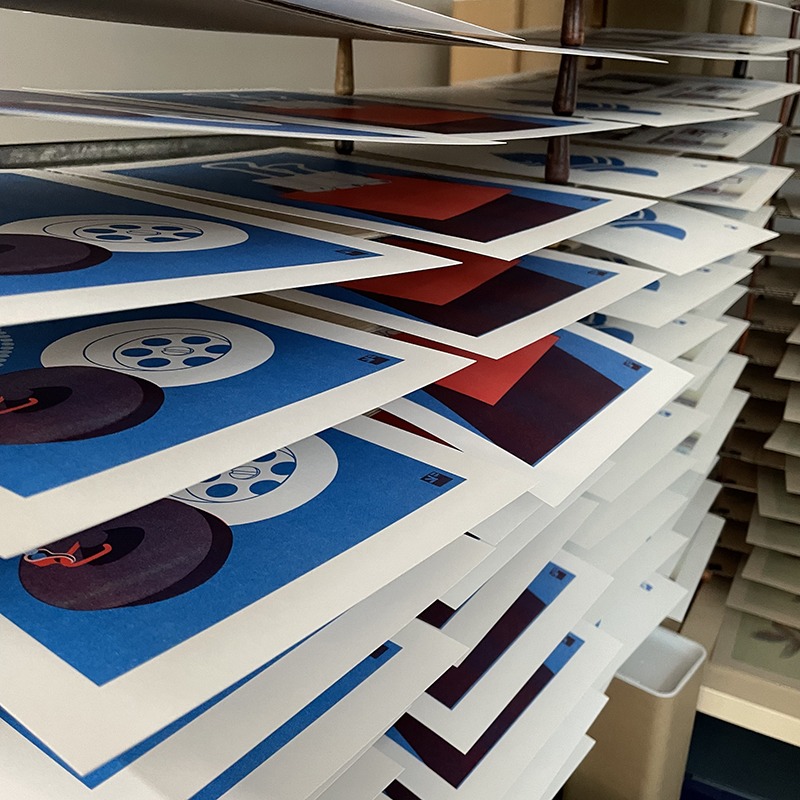

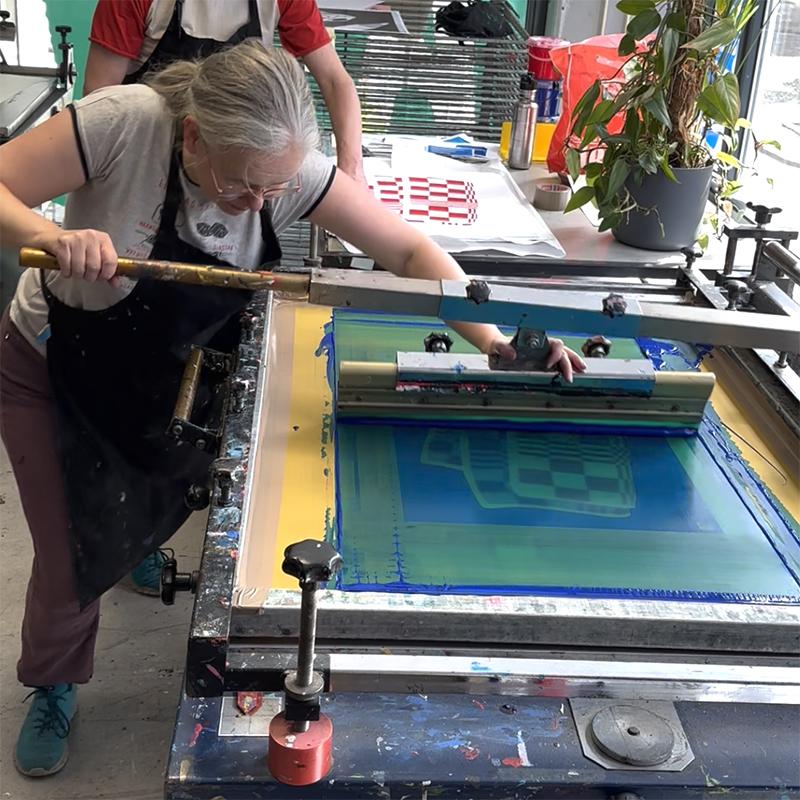

At VrijFormaat, we do all sorts of things. We design, draw, paint, embroider, sew, tinker, carve and print. The latter, in particular, has become a much-loved activity in recent years.
A few years ago, we bought our first Risograph, and that was one of the best decisions we’ve made as designers. We now have a larger machine in the studio, and we still get a real kick out of it whenever it starts up.
Riso
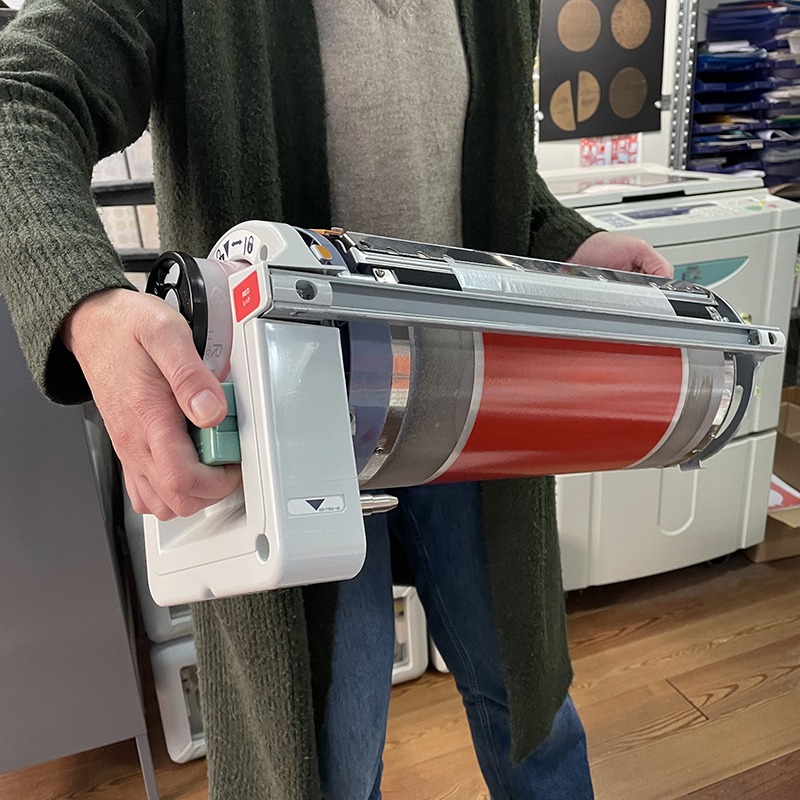
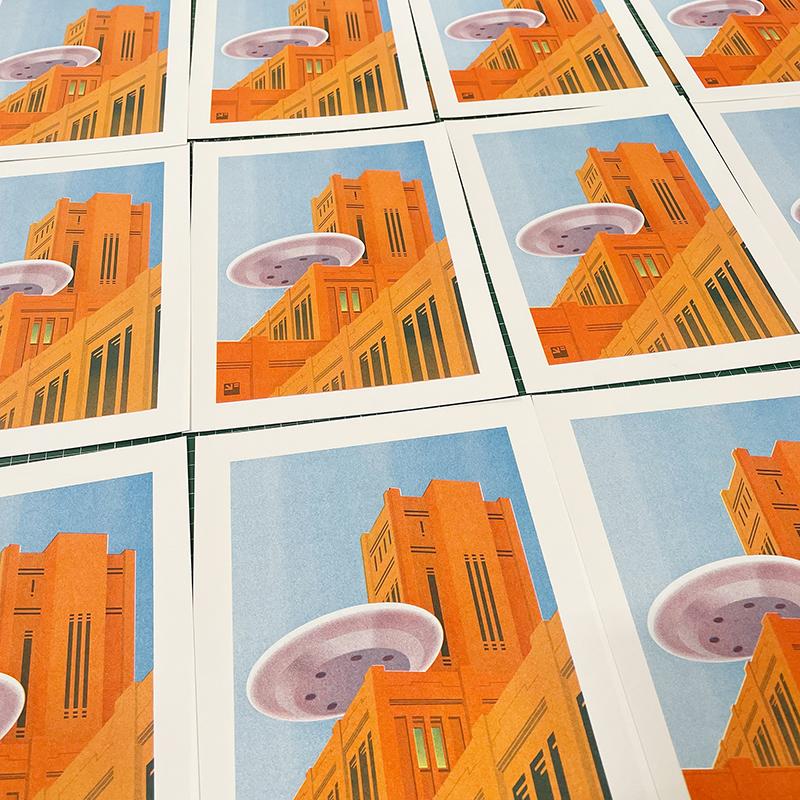

Riso, or risography, is a sustainable stencil printing technique¹. And although, at first glance, the machine looks more like a photocopier than the old-fashioned stencil machines, the printing process of this digital duplicator is actually quite similar.
Just like screen printing, risography is a printing technique that uses separate colour layers. The resulting effect is also somewhat reminiscent of screen printing in terms of its atmosphere. However, with this technique, rather than creating a screen for each layer, you use a stencil – known as a ‘master’ – through which the ink is forced. The inks, which are based on vegetable oils such as soya or rice oil, are semi-transparent, resulting in an endless range of possible colour shades and blending effects.
Each colour has its own interchangeable ‘drum’ and, as mentioned, the colours are printed separately from one another, layer by layer. In theory, with the correct settings, those layers should align perfectly. However, every riso machine and every drum has its own quirks, variations and sensitivities, which regularly result in unexpected or sometimes unwanted effects. Yet it is precisely these small imperfections, combined with the intense colour possibilities, that give riso prints their charming and distinctive character.
1 Riso is a brand name. ‘Digital duplicator’ is therefore actually a better term, or at least a more neutral one. However, quite apart from the fact that we ourselves actually print on a Riso machine, the words ‘riso’ and ‘riso print’ have become so firmly established – and have even given rise to the verb ‘to risoprint’ – so these are the terms we ourselves use most often.
Screen print


Another printing technique we really like is screen printing. We don’t do this in our studio, but at Kapitaal Utrecht.
Every now and then, we select designs from the VrijFormaat collections and adapt them so that they can be screen printed. We usually opt for screen printing when we want to print larger formats than our A3 Riso machine can handle. But we’ve also printed A6 cards on thick card stock on occasion. Printing on fabric also sounds like great fun to us, so we’re sure we’ll get round to that eventually.
We produce the screen prints in small editions; they are numbered and signed.
A number of ‘B-grade’ prints are also available for some designs; these are neither numbered nor signed, but bear a small stamp reading ‘OOPS’.
Other analoque prints


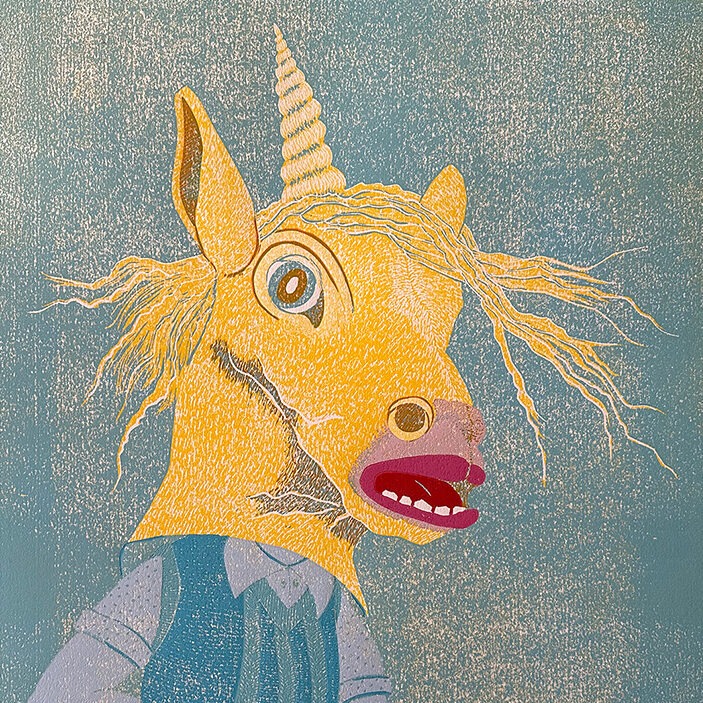
As well as riso and screen printing, we enjoy experimenting with other printing techniques, such as linocut, tetra pak etching, block printing and monoprint. You can find some of these in our portfolio under ‘other printed stuff’.
But do also take a look at evisch.nl, which is Esther’s own website. She’s absolutely mad about linocuts and has recently been steadily working her way through a sizeable stack of linoleum. She creates single-colour prints, as well as reduction prints with multiple layers.
Digital printing


We commission other printers to produce reproductions of some of our artwork. For example, we have had large canvas posters made of embroidery pieces from the Growing series and drawings from the Weird & Wonderful collection. We scan the original work in high resolution, have it printed on canvas, and have developed our own system for attaching it to hardwood slats.
A growing part of our work is also available as postcards. These include, for example, reproductions of risograph prints from the Utrecht and Birds series. But we also have cards featuring embroidery, drawings and paintings.
You can find the cards and posters in our portfolio.
Anything else?
We’ve got all sorts of ready-made items, but if, whilst browsing this site, you’ve spotted any designs you’d like to own as a large poster, a luxury Giclée art print, or perhaps something completely different, just let us know. We can’t promise anything, but we can always see what’s possible!